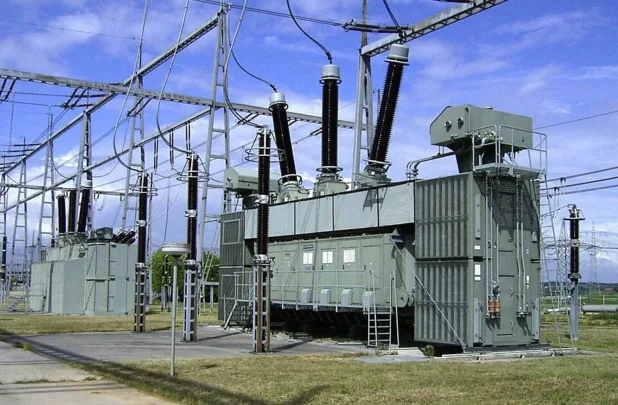
Automatic transfer switches play a vital role in such situations, transferring the electrical supply from one source to another.
On 6 October 2026, SOCOMEC introduced its new-generation ATyS P700 and ATyS P1000 automatic transfer switches, combining an extended current range, fast switching and a range of control and monitoring functions.
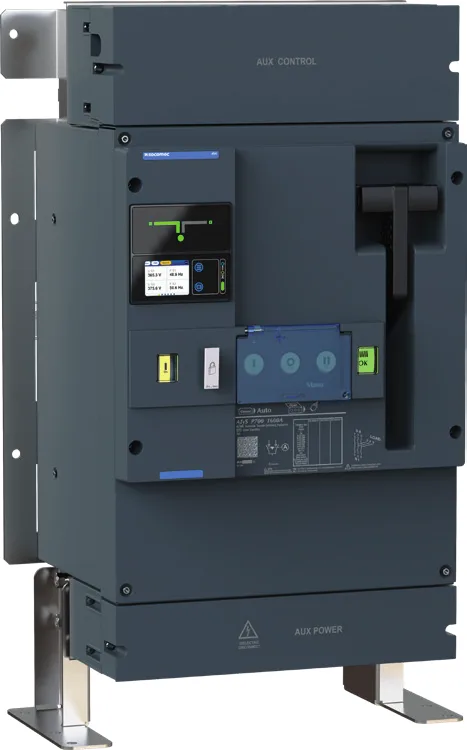
Figure 1: Socomec ATyS P700/P1000, frame
F4 (800–1600 A)
These are PC-class automatic transfer switching equipment (ATSE) compliant with IEC 60947-6-1, with rated currents from 800 to 4000 A.
A distinguishing feature of both models is their all-in-one design: the switch, source monitoring, dual power supply and controller are housed in a single enclosure. There is no need for a separate controller, interlocks or power supply unit.
The ATyS P700 is designed primarily for conventional mains/mains and mains/generator applications. The ATyS P1000 also provides energy metering, diagnostics and closed-transition switching.
The devices are intended primarily for critical-power applications, including hospitals, data centres, industrial facilities, infrastructure sites and generator systems with automatic mains failure (AMF) functionality.
What Has Changed in the New Generation of ATyS Transfer Switches?
The most significant change is that a fully automatic all-in-one transfer switch is now available up to 4000 A, with an AC-33A rating at full rated current.
By comparison, the previous ATyS p range covered 125–3200 A. For higher currents, SOCOMEC offered the remotely operated ATyS d H, which did not have a built-in controller.
The new models therefore make it possible to use an automatic transfer switch with integrated control in higher-capacity electrical installations.
The main technical differences compared with the previous ATyS p range are:
| Parameter | Previous ATyS p | New ATyS P700 / P1000 |
|---|---|---|
| Current range | 125–3200 A | 800–4000 A |
| Utilisation category | AC-23; on the 3200 A model, AC-23 up to 1600 A | AC-33A without derating |
| Short-time withstand current Icw (1 s) | 35–50 kA | 55/66/85 kA (frame F4 / F5 / F6) |
| Short-circuit making capacity Icm | – | 121/145/187 kA |
| Contact transfer time | – | less than 100 ms (less than 500 ms including controller) |
| Closed transition | no | yes (ATyS P1000 CTTS) |
In addition to improving the technical specifications, SOCOMEC has focused on ease of use and maintenance.
Key features of the new models include:
- quick configuration: the built-in setup wizard allows the main parameters to be configured in approximately 30 seconds;
- user-friendly interface: a colour touchscreen and USB-C interface make it easier to configure the device and read its settings and event log using Easy Config software;
- dielectric isolation: high-voltage tests can be performed without damaging the electronics or disconnecting them;
- emergency manual operation: the design allows the power supply to be transferred manually, even under load;
- integrated communications: Modbus RTU and Digiware connections are built in, eliminating the need for a separate expansion module;
- electromagnetic compatibility: the devices meet EMC Class A requirements.
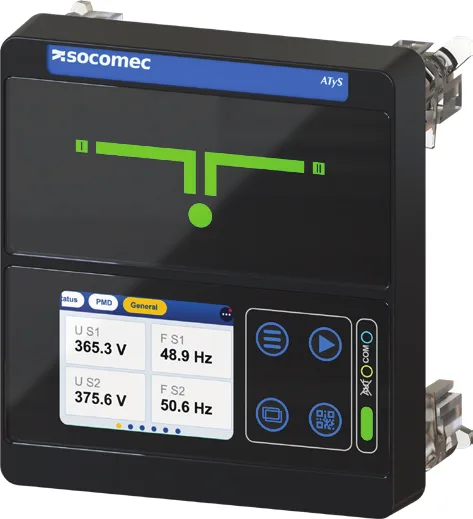
P700 or P1000?
Although both models use the same switching mechanism and have identical short-circuit withstand ratings, they differ primarily in their control, metering and diagnostic capabilities.
The ATyS P700 meets conventional automatic backup power requirements and is suitable for applications where the primary objective is automatic transfer between two power sources.
The ATyS P1000 is intended for more complex electrical installations where, in addition to automatic transfer, it is important to monitor energy consumption, assess the condition of the device or perform transfer without interruption.
Functional differences between the models:
| Function | ATyS P700 | ATyS P1000 |
|---|---|---|
| Mains/mains and mains/generator | yes | yes |
| Generator/generator | with 4IN/4OUT remote module | yes |
| Open transition (I-0-II) | yes | yes |
| Closed transition (CTTS) | – | yes, 4-pole |
| Voltage, frequency and phase-sequence monitoring | yes | yes |
| Neutral conductor interruption detection | – | yes |
| Current and energy metering | with DIRIS Digiware I-30 add-on modules | built-in, PMD Class 0.5 (IEC 61557-12) |
| Terminal temperature monitoring | – | yes |
| Overload and short-circuit detection | – | yes |
| Conditional logic (PLC editor) | – | yes |
| Condition-based maintenance | – | yes |
| Load shedding | yes | yes, also based on consumption or tariff |
| Programmable inputs/outputs | 4/1 | 4/1 |
| Generator starting-circuit monitoring | optional | yes |
The functionality of both models can be extended with up to four plug-in modules.
Available options include a 2IN/2OUT input/output module, a fire input module that moves the switch to the 0 position, and an expansion module. The latter allows up to two 4IN/4OUT remote modules to be connected.
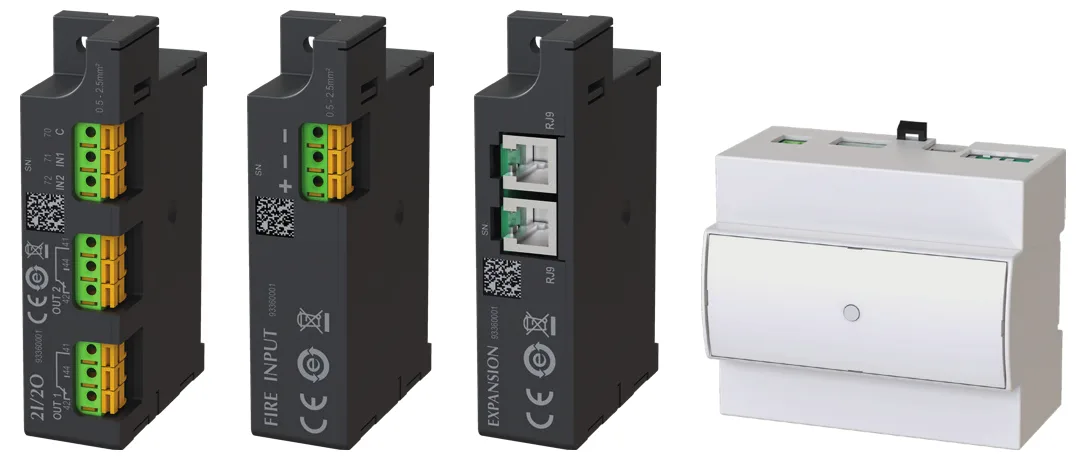
Figure 3: Socomec 2IN/2OUT, Fire input and Expansion plug-in modules, and the 4IN/4OUT remote module.
This modular design allows the device functionality to be adapted to the requirements of each electrical installation
How Do the ATyS P700 and P1000 Differ from Competing Products?
When comparing the technical specifications of the new models, a natural question arises: what do these devices offer that is not available in comparable solutions from other manufacturers?
We compared the technical data for the ATyS P700 and P1000 with publicly available catalogues from major manufacturers as of October 2026. The comparison revealed several features whose equivalent combination we did not find in other manufacturers’ PC-class automatic transfer switches.
- All-in-one automatic transfer switch up to 4000 A
Integrated-controller transfer switches from other manufacturers generally have upper current ratings of 1600 or 3200 A. At higher currents, a separate controller or circuit-breaker-based solution is required. The ATyS P700 and P1000 provide a PC-class automatic transfer switch with integrated control at rated currents up to 4000 A.
- AC-33A utilisation category across the full rated current range
Other solutions commonly offer only AC-33B (infrequent switching), or their permissible motor-load current is significantly lower than their rated current. Many competing devices fall into the AC-33B category, intended for less frequent operation. The permissible current under motor load may also be substantially below the device’s rated current.
- Contact transfer time below 100 ms
Speed matters when transferring a power supply, particularly in critical-power systems.
The ATyS P700 and P1000 have a contact transfer time of less than 100 ms. Comparable devices may take up to 500 ms, or even 1–3 seconds at higher currents.
- High short-circuit withstand capability
The new models offer a short-time withstand current of up to 85 kA (Icw, 1 s) and a rated short-circuit making capacity of up to 187 kA (Icm).
These ratings are particularly important in distribution boards with high prospective short-circuit currents, where coordination with upstream protective devices must also be considered.
- Closed transition in a PC-class transfer switch
One of the most notable features of the ATyS P1000 is closed-transition transfer switching (CTTS).
In the IEC market, no-break transfer is generally available in circuit-breaker-based systems. The ATyS P1000 also makes this function available in a PC-class transfer switch.
We will examine closed-transition technology and its applications in more detail in a separate blog article.
Other features worth considering during system design include dielectric isolation, the fire input module, generator starting-circuit monitoring and the ATyS P1000 terminal temperature monitoring function.
What Does PC Class Mean, and Why Does It Matter?
Selecting an automatic transfer switch involves more than comparing rated current and transfer time. It is equally important to understand how the device is constructed and behaves during a short circuit.
IEC 60947-6-1 divides transfer switching equipment into three classes according to its construction and short-circuit characteristics. The ATyS P700 and P1000 belong to PC class.
| Class | Based on | Short-circuit making | Short-circuit withstand | Short-circuit breaking | Key advantages |
|---|---|---|---|---|---|
| PC | load-break switch or switch-disconnector | yes (Icm) | yes (Icw) | no; interrupted by upstream protection | compact and fast; contacts remain in position even without power |
| CB | two circuit breakers with overcurrent releases | yes | yes | yes (Icu, Ics) | protection and transfer switching in one device |
| CC | contactors | no | only with upstream protection | no | suitable for frequent switching at lower currents |
A distinguishing feature of a PC-class transfer switch is that it does not trip independently in the event of a short circuit. Interrupting the short-circuit current is the responsibility of the upstream protective device.
This simplifies the control logic: there is no risk of the switch transferring the second source onto the same fault after a short-circuit trip.
When selecting a PC-class device, particular attention must therefore be paid to short-time withstand current (Icw), short-circuit making capacity (Icm) and coordination with the upstream protective device.
What Does the AC-33A Utilisation Category Indicate?
KThe utilisation category defines the types of load a transfer switch can switch and the operating conditions for which it is suitable.
- AC-31 – resistive loads;
- AC-32 – mixed loads;
- AC-33 – motor loads or mixed loads incorporating motors.
The letter A indicates frequent operation, while B indicates infrequent operation. AC-33A is therefore the most demanding of the conventional utilisation categories. The ATyS P700 and P1000 meet the AC-33A utilisation category across their full rated current range.
| Rated current | Frame | Icw 1 s | Icw 3 s | Icm | Electrical endurance at rated current |
|---|---|---|---|---|---|
| 800–1600 A | F4 | 55 kA | 36 kA | 121 kA | 8000 cycles |
| 2000–2500 A | F5 | 66 kA | 66 kA | 145 kA | 8000 cycles |
| 3200–4000 A | F6 | 85 kA | 75 kA | 187 kA | 6000 cycles |
The ATyS P700 and P1000 share the same principal technical specifications. Both are available in three frame sizes and in 3- or 4-pole versions. The rated insulation voltage (Ui) is 1000 V, the rated impulse withstand voltage (Uimp) is 12 kV, the overvoltage category is IV and the pollution degree is 3. Mechanical endurance is 10,000 cycles.
Conclusion
SOCOMEC’s new-generation ATyS P700 and P1000 transfer switches extend the applications of automatic transfer switching equipment with integrated control to rated currents of up to 4000 A.
Particularly noteworthy features include the AC-33A utilisation category throughout the rated current range, fast transfer, high short-circuit withstand capability and integrated control and monitoring functions.
The ATyS P700 offers a solution for conventional automatic backup power applications, while the ATyS P1000 additionally provides energy consumption measurement, condition-based maintenance and closed-transition switching.
The appropriate choice nevertheless depends on the electrical installation’s design, load characteristics, required continuity of supply and coordination with other protective devices.
Choosing the right solution begins with the actual requirements of the electrical installation.
If you would like to know which ATyS model is best suited to your electrical installation, OÜ Pistrik I-V can help you select the appropriate device, check coordination with upstream protective devices and prepare a quotation.